
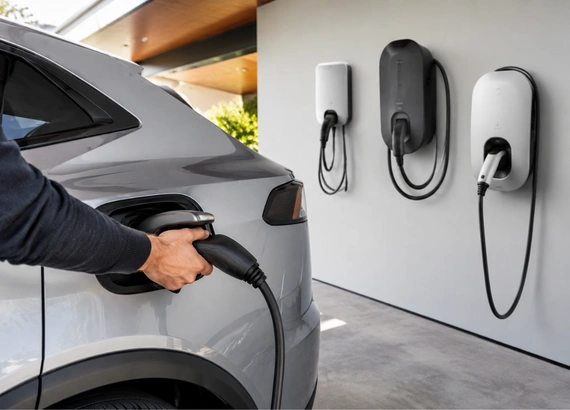
Charging an electric vehicle at home can make everyday driving much easier. Instead of planning your routine around public charging stations, you can plug in when you return home and have your vehicle ready for the next trip. However, choosing the right EV charger for home isn’t simply about buying the most powerful option available. The best choice depends on your vehicle’s charging capability, how much you drive, how quickly you need to charge, and the electrical capacity of your home.
Different chargers offer different speeds, features, and installation requirements, so understanding these differences can help you avoid choosing a charger that doesn’t suit your needs. In this guide, we’ll explain the main types of home EV chargers, what affects charging speed, how to choose the right option, where to install it, and what you should consider about your home’s electrical system before getting started.
What Is an EV Charger for Home?
An EV charger for home is a device that supplies electricity to your electric vehicle so you can recharge its battery at home. Instead of relying only on public charging stations, you can charge your vehicle when it’s parked, such as overnight or while you’re at home during the day.
You can charge an EV using a standard household power outlet, but this is generally slower and may not be practical for regular daily charging. A dedicated home EV charger can provide faster charging and is designed to work with your home’s electrical system. The right option depends on your vehicle’s charging capability, how much you drive, and the electrical capacity available at your property. Understanding these factors before choosing a charger can help you select an option that suits your daily routine without paying for features you don’t need.
What Are the Different Types of EV Chargers?

When choosing an EV charger for home, you’ll find several charging options. The right choice depends on how often you drive, how quickly you want to recharge, and the features you find useful.
Standard Household Outlet
A standard power outlet can charge an EV without installing a dedicated charger. However, charging is slower, making this option more suitable for occasional driving or vehicles that don’t need frequent recharging. For daily use, charging from a standard outlet may take longer than expected.
Dedicated Home EV Charger
A dedicated home charger provides faster charging and is better suited to regular EV use. It connects directly to your home’s electrical system and requires suitable electrical installation. For homeowners who drive frequently, it can make overnight charging much more practical and convenient.
Smart EV Charger
Smart chargers add features that give you greater control over when and how your EV charges. Depending on the model, you may be able to:
- Schedule charging through a mobile app.
- Monitor electricity usage.
- Manage charging around your household’s energy use.
- Integrate charging with solar or other home energy systems.
Smart features can be particularly useful if you want more control over charging times and energy consumption.
How Fast Can an EV Charger for Home Charge Your Car?
The charging time of an EV depends on more than just the charger you choose. A charger may have a high power output, but your vehicle can only accept electricity up to its own maximum AC charging capacity. Your battery size, current charge level, and the electrical capacity available at your home can also affect how quickly your vehicle charges. For more information about EV charging and electric vehicle energy use, refer to EECA’s electric vehicle information
What Affects EV Charging Time?
- Battery capacity: A larger battery generally takes longer to charge than a smaller one.
- Charger output: A higher-output charger can deliver more power when the vehicle supports it.
- Vehicle charging capability: Your EV has a maximum AC charging rate, which can limit the charging speed.
- Starting battery level: Charging from a very low battery level usually takes longer than adding a smaller amount of charge.
- Home electrical supply: Your property’s available electrical capacity may limit the amount of power the charger can safely use.
For example, installing a higher-rated charger won’t necessarily make your EV charge faster if the vehicle cannot accept that level of power. Checking both your vehicle’s specifications and your home’s electrical capacity is important before choosing an EV charger for home.
How Do You Choose the Right EV Charger for Your Home?

Choosing an EV charger should start with your actual charging needs, not simply the highest charging speed available. The right option should work well with your vehicle, fit your daily routine, and be suitable for your home’s electrical system.
Check Your EV’s Requirements
Start by checking your vehicle manufacturer’s specifications. Look for its maximum AC charging rate and make sure the charger’s connector is compatible with your EV. Choosing a charger that matches your vehicle’s requirements helps you avoid paying for charging capacity your car cannot use.
Consider Your Daily Driving
Think about how much you actually drive rather than how quickly you can charge.
- If you drive short distances each day, overnight charging may be more than enough.
- Frequent long-distance driving may make faster charging more useful.
- Consider how often you’ll need to recharge during a typical week.
Consider Your Home’s Electrical Capacity
Your home also needs to be able to support the charger safely. Consider your:
- Existing electrical supply.
- Switchboard capacity.
- Available circuits.
- Other high-powered appliances, such as heat pumps or ovens.
If your electrical system has limited capacity, an upgrade may be needed before installation.
Think About Future Needs
It’s also worth considering what your household may need later. You might add another EV, install solar panels, or want smart charging features. Choosing with these future needs in mind can help you avoid another electrical upgrade later.
Where Should You Install an EV Charger at Home?
The best location for an EV charger should make charging convenient without creating unnecessary safety risks. Think about where your vehicle is normally parked and how easily you can connect the charging cable.
- Garage: A garage can provide a convenient, protected location, especially if the vehicle is parked nearby.
- Carport: A carport can work well when the charger is positioned close to where the vehicle is usually parked.
- Driveway: If you park outdoors, a driveway installation can be practical, provided the charger is suitable for its surroundings.
- Keep the cable accessible: Choose a position that allows the cable to reach your vehicle without excessive stretching.
- Consider weather exposure: Outdoor chargers should be appropriately rated and positioned to handle the conditions around your property.
- Avoid trip hazards: Don’t place the charger or cable where people regularly walk.
- Think about future use: Leave enough room for easy access if you change vehicles or add another EV later.
A practical location should allow you to plug in easily while keeping the charger, cable, and surrounding area safe and accessible.
Does Your Home Need Electrical Upgrades for an EV Charger?
Installing an EV charger adds another significant electrical load to your home, so your existing electrical system should be checked before choosing a charger. This is particularly important in older homes or properties that already use several high-powered appliances.
A professional assessment can look at:
- Electrical capacity: Your existing supply needs to have enough capacity to support the charger safely.
- Switchboard condition: An older switchboard may need an upgrade before a charger can be added.
- Dedicated circuit: A dedicated circuit may be required to provide appropriate protection and reliable charging.
- Other appliances: Heat pumps, ovens, air conditioning, and other high-powered appliances can reduce the capacity available for EV charging.
- Future requirements: If you plan to add another EV or other high-powered appliances, this should also be considered.
Once you’ve selected a suitable charger, professional EV charger installation ensures it is connected safely and your home’s electrical system can support its requirements.
What Should You Consider Before Choosing an EV Charger?

Choosing an EV charger becomes easier when you compare it with your actual driving habits, vehicle, and home setup. Use this checklist before making a decision:
- Vehicle compatibility: Check that the charger supports your EV’s connector and maximum AC charging rate.
- Daily driving: Consider how far you normally drive and how often you’ll need to recharge.
- Charging speed: Decide whether overnight charging is enough or whether you need faster charging.
- Electrical capacity: Make sure your home can safely support the charger’s power requirements.
- Installation location: Choose a practical position with easy access to your vehicle and minimal cable hazards.
- Smart features: Consider app controls, scheduled charging, and energy monitoring if these features would be useful.
- Solar plans: If you have or may install solar, look for charging options that can work with your energy setup.
- Future EVs: If another EV could be added later, consider whether your electrical system can accommodate additional demand.
- Overall suitability: Don’t choose a charger based on speed alone. It should work safely with both your vehicle and home’s electrical system.
Common Mistakes to Avoid When Choosing an EV Charger
Choosing an EV charger isn’t only about finding the fastest or most feature-rich option. A charger should suit your vehicle, daily driving needs, and home’s electrical system.
Choosing Only Based on Charging Speed
A higher charging rate isn’t always better. If your EV cannot accept that level of power, you may pay more without getting faster charging.
Ignoring Your Home’s Electrical Capacity
Your home needs enough electrical capacity to safely support the charger. An older switchboard or heavily loaded electrical system may require an assessment before installation.
Not Checking Vehicle Compatibility
Always check your EV’s maximum AC charging rate and connector type before choosing a charger. This helps ensure the charger works properly with your vehicle.
Choosing a Poor Installation Location
A charger should be easy to reach and positioned close enough to your vehicle. Consider cable length, weather exposure, accessibility, and potential trip hazards.
Attempting Electrical Installation Yourself
EV chargers involve electrical connections that should be handled by an appropriately qualified professional. DIY installation can create serious safety risks and may not meet electrical requirements.
Taking these factors into account can help you avoid unnecessary costs and choose a charger that works well for your home and vehicle. A suitable choice should provide convenient charging while supporting safe and reliable everyday EV use.
Benefits of Having an EV Charger at Home
Having an EV charger at home can make everyday electric vehicle ownership more convenient. Key benefits include:
- Convenient overnight charging: Plug in when you get home and charge while you sleep, so your EV can be ready for the next day.
- Less reliance on public chargers: Regular home charging reduces the need to visit public charging stations for everyday driving.
- Fits your daily routine: You can charge whenever your vehicle is parked at home rather than making a separate trip to recharge.
- Faster charging: A dedicated home charger can provide faster charging than a standard household outlet.
- Better control: Smart chargers can allow you to schedule charging and monitor energy use.
- Potential off-peak savings: Where suitable electricity plans are available, charging during off-peak periods may help manage energy costs.
- Useful for regular EV use: Home charging is particularly practical for households that rely on an EV for commuting and daily travel.
Conclusion
Choosing the right EV charger for home depends on more than charging speed alone. Your EV’s charging capability, daily driving habits, battery requirements, and preferred charging time should all be considered before making a decision. Your home’s electrical capacity is equally important, particularly if you already use high-powered appliances. The charger’s location, available features, and your future needs should also be part of the decision. The most powerful charger isn’t necessarily the best option if your vehicle or electrical system cannot make full use of it.
Before installing a charger, having your home’s electrical requirements assessed can help you choose a suitable and safe option. If you’re considering an EV charger for your home in Auckland, contact NXG Electrical to discuss your requirements and arrange professional EV charger installation.
