
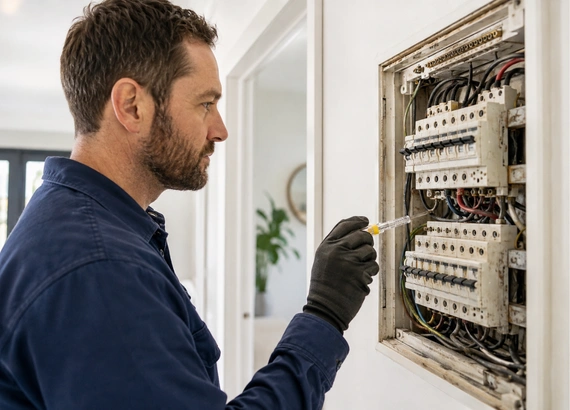
Your switchboard is the heart of your home’s electrical system, safely distributing electricity to every room while protecting your circuits from overloads and electrical faults. Despite its important role, it’s often overlooked because it operates quietly in the background. Many homeowners don’t think about their switchboard until they experience issues such as frequent power trips, flickering lights, or difficulty running multiple appliances at the same time.
An outdated switchboard can struggle to meet the electrical demands of modern homes, affecting safety, reliability, and the overall performance of your electrical system. Ignoring the warning signs may increase the risk of electrical faults and costly repairs.
In this guide, you’ll discover the seven key signs it’s time to upgrade your switchboard, why an upgrade is important, and how it can help keep your home safe, efficient, and prepared for your future electrical needs.
What Is a Switchboard and Why Is It Important?
Your switchboard is one of the most important parts of your home’s electrical system. It manages the flow of electricity and helps protect your home from electrical faults, making it essential for both safety and reliable power.
A switchboard receives electricity from the main power supply and distributes it safely to different circuits throughout your home. Each circuit powers specific areas or appliances, such as lighting, power points, kitchen appliances, or air conditioning. If an electrical fault or overload occurs, the switchboard automatically disconnects the affected circuit to help prevent damage and reduce safety risks.
Older homes often have fuse boards that use ceramic fuses, which must be replaced when they blow. Modern switchboards use circuit breakers and safety switches (RCDs) that automatically trip when they detect an overload, short circuit, or electrical fault. This provides faster protection and makes restoring power much easier once the issue has been resolved.
A modern switchboard offers several advantages, including:
- Better protection against electrical overloads and short circuits.
- Improved safety with modern circuit breakers and safety switches.
- Greater capacity to support today’s electrical appliances.
- Reduced risk of electrical fires caused by faulty wiring.
- Reliable power distribution throughout your home.
- Compliance with current New Zealand electrical safety standards.
Upgrading to a modern switchboard helps ensure your home’s electrical system is safer, more reliable, and capable of meeting your current and future electrical needs.
Why Should You Upgrade Your Switchboard?

Your home’s electrical needs have likely changed over the years, but your switchboard may not have. Upgrading your switchboard helps ensure your electrical system can safely support modern appliances while improving the overall safety and reliability of your home.
- Improved electrical safety: A modern switchboard is designed to detect electrical faults quickly and disconnect affected circuits, helping reduce the risk of electric shocks and electrical hazards.
- Supports modern appliances: Today’s homes use more high-powered appliances than ever before. An upgraded switchboard provides the capacity needed to safely operate items like heat pumps, induction cooktops, air conditioners, and EV chargers.
- Better protection against electrical faults: Modern circuit breakers and safety switches respond much faster than traditional fuse boards, helping protect your electrical system from overloads and short circuits.
- Reduces fire risks: Outdated switchboards can become less reliable over time. Replacing ageing components helps lower the risk of overheating and electrical fires caused by faulty or overloaded circuits.
- Helps meet current New Zealand electrical standards: Upgrading your switchboard helps ensure your home’s electrical system complies with current safety requirements and is suitable for modern electrical installations.
- Increases reliability: A modern switchboard provides a more stable and dependable power supply, reducing unexpected electrical interruptions and improving the overall performance of your home’s electrical system.
It also prepares your electrical system to meet both your current needs and any future upgrades with confidence.
7 Signs It’s Time to Upgrade Your Switchboard

Your switchboard often gives warning signs before it can no longer safely support your home’s electrical needs. Recognising these signs early can help prevent electrical faults, improve safety, and avoid costly repairs.
1. Your Circuit Breakers Trip Frequently
Circuit breakers are designed to protect your home by automatically cutting power when they detect an overload or electrical fault. While an occasional trip is normal, repeated tripping is often a sign that your electrical system is under strain.
Common reasons include:
- Too many high-powered appliances running on the same circuit.
- An ageing switchboard that can’t handle modern electrical demands.
- Overloaded circuits caused by increased power usage.
- Faulty wiring or damaged electrical components.
If your circuit breakers trip regularly, simply resetting them won’t solve the underlying problem. Ignoring repeated tripping can lead to ongoing electrical issues, inconvenience, and increased safety risks.
If the problem continues after reducing the electrical load, it may be time to upgrade your switchboard. A modern switchboard provides better circuit protection, improved reliability, and the capacity to safely support today’s electrical appliances.
2. You Still Have Ceramic Fuses
If your home still uses ceramic fuses instead of modern circuit breakers, your switchboard may be outdated. While ceramic fuses were once the standard, they don’t offer the same level of protection, convenience, or reliability as today’s switchboards.
Key differences include:
- Ceramic fuses must be replaced after they blow, while circuit breakers can simply be reset after the fault has been resolved.
- Modern circuit breakers respond more quickly to electrical faults and overloads.
- New switchboards often include safety switches (RCDs) that provide additional protection against electric shocks.
Older fuse boards are generally less safe because they may not be designed to handle the electrical demands of modern homes. They can also increase the risk of overloaded circuits and make it more difficult to identify electrical faults.
Upgrading to a modern switchboard offers several benefits:
- Improved electrical safety.
- Better protection against overloads and short circuits.
- Increased capacity for modern appliances.
- Greater convenience and easier fault management.
- Compliance with current New Zealand electrical standards.
3. You’re Renovating or Extending Your Home
Renovating or extending your home often means adding new lighting, power points, appliances, or electrical equipment. These upgrades increase the demand on your electrical system, and an older switchboard may not have the capacity to support it safely.
Things to consider include:
- Additional rooms require new electrical circuits.
- Modern kitchens and bathrooms use more high-powered appliances.
- Home offices, heat pumps, and EV chargers increase electricity demand.
- An outdated switchboard may struggle to handle the extra load.
Upgrading your switchboard during a renovation helps ensure your home’s electrical system is ready for both your current needs and future upgrades.
4. You Frequently Use Power Boards and Extension Leads
Using a power board occasionally is normal, but relying on multiple extension leads or power boards every day may indicate that your home doesn’t have enough power outlets or electrical capacity.
Common warning signs include:
- Multiple appliances connected to a single outlet.
- Extension leads used as a permanent solution.
- Power boards overloaded with high-powered devices.
- Limited outlets in frequently used areas.
If you regularly depend on extension leads, it may be time to upgrade your switchboard and install additional power points to better support your household’s electrical needs.
5. Your Lights Flicker or Dim Regularly
Lights that flicker or dim occasionally may simply need a new bulb, but if the problem occurs throughout your home or when large appliances are running, it could indicate your switchboard is struggling to manage the electrical load.
Possible causes include:
- Voltage fluctuations within your electrical system.
- Overloaded circuits.
- An ageing switchboard with limited capacity.
- Loose electrical connections or other electrical faults.
Professional inspection can determine whether your switchboard needs upgrading to provide a safer and more reliable power supply.
6. You’re Installing High-Powered Appliances
Modern homes are using more electricity than ever before. If you’re planning to install high-powered appliances, it’s important to ensure your switchboard can safely handle the additional electrical load.
Examples of high-powered appliances include:
- EV chargers
- Heat pumps
- Air conditioning systems
- Induction cooktops
These appliances require more power than older household devices. If your switchboard doesn’t have enough capacity, it can lead to overloaded circuits, frequent circuit breaker trips, and reduced electrical performance.
Before installing new appliances, it’s a good idea to have your switchboard assessed. Upgrading it ensures your electrical system can safely support increased power demand and future household upgrades.
7. Your Switchboard Is More Than 20–30 Years Old
If your switchboard is more than 20 to 30 years old, it may no longer meet the electrical demands of a modern home. Older switchboards were designed for a time when homes used far fewer electrical appliances than they do today.
As switchboards age, they can experience:
- Wear and tear on electrical components.
- Reduced reliability and performance.
- Limited capacity for modern electrical loads.
- Higher risk of electrical faults.
Upgrading an older switchboard improves your home’s electrical safety, increases reliability, and helps ensure compliance with current New Zealand electrical standards.
Benefits of Upgrading Your Switchboard
Upgrading your switchboard is more than just replacing old equipment. It improves the safety, reliability, and performance of your home’s electrical system while preparing it for future electrical needs.
- Improved electrical safety: Modern switchboards are designed with advanced circuit breakers and safety switches that help protect your home from electrical faults and electric shocks.
- Greater protection against overloads: An upgraded switchboard can better manage increased electrical demand, reducing the risk of overloaded circuits and unexpected power interruptions.
- Reliable power supply: A modern switchboard distributes electricity more efficiently, helping provide consistent and reliable power throughout your home.
- Supports future electrical upgrades: Whether you’re installing an EV charger, heat pump, air conditioning, or additional power points, a modern switchboard is better equipped to handle future electrical requirements.
- Better energy efficiency: While a switchboard doesn’t directly reduce electricity usage, it helps your electrical system operate more efficiently by supporting modern electrical installations and reducing faults.
- Reduced maintenance: New switchboards are more reliable and require fewer repairs than ageing fuse boards or outdated electrical systems, helping minimise ongoing maintenance.
- Increased home value: A modern switchboard is a valuable upgrade that improves your home’s safety and can make the property more attractive to future buyers.
Upgrading your switchboard is a long-term investment that helps protect your home today while ensuring your electrical system is ready for the future.
When Should You Call a Professional Electrician?
If you notice any of the following signs, it’s best to arrange an inspection before the problem becomes more serious.
- Frequent circuit breaker trips: Regular tripping may indicate overloaded circuits, faulty wiring, or a switchboard that can no longer handle your home’s electrical demand.
- Burning smell: A burning odour coming from your switchboard or nearby electrical components may be a sign of overheating and should be investigated immediately.
- Flickering lights: If lights flicker throughout your home or dim when appliances are used, it could indicate your switchboard is struggling to manage the electrical load.
- Old fuse board: Homes with ceramic fuses or outdated fuse boards should be assessed to determine whether a modern switchboard upgrade is needed.
- Renovating your home: Home extensions, kitchen upgrades, or adding new rooms often increase electrical demand and may require a switchboard upgrade.
- Installing an EV charger: Electric vehicle chargers require significant electrical capacity, making it important to ensure your switchboard can safely support the additional load.
- Switchboard over 20 years old: Older switchboards may not provide the protection or capacity required for today’s electrical needs.
- Repeated electrical faults: Ongoing issues such as power outages, buzzing sounds, sparking, or overloaded circuits should always be professionally assessed.
Professional inspection can identify the underlying issue and determine whether repairing or upgrading your switchboard is the safest and most effective solution.
Conclusion
Upgrading your switchboard is one of the most effective ways to improve the safety and reliability of your home’s electrical system. As households continue to rely on more electrical appliances and technology, older switchboards may no longer have the capacity or protection needed to meet modern electrical demands. If you’ve noticed warning signs such as frequent circuit breaker trips, flickering lights, or an outdated fuse board, it’s important not to ignore them, as they could indicate your switchboard needs attention.
A professionally upgraded switchboard provides better protection against electrical faults, supports future electrical upgrades, and helps ensure your home complies with current New Zealand electrical standards. It also gives you greater confidence that your electrical system is operating safely and efficiently. If you’re considering a switchboard upgrade in Auckland, or need expert advice about your home’s electrical system, contact NXG Electrical today for reliable switchboard upgrades and professional residential electrical services.

